
|
In a Hurry?
|
 Go straight to the Quick Selection Guide Go straight to the Quick Selection Guide |
|
Introduction
|
| Program Launchers try to provide a more efficient way of running programs than by using the Windows Start Menu or having your desktop littered with icons. The approach adopted varies from product to product and ranges from dockable windows to tray icons through to keyword typing. None of the solutions is perfect; each has its strengths and weaknesses. The suggestions will be divided in five subcategories: keyword search, keyword command, panels, menus and docks. |
|
Discussion
|
|
Keyword Search
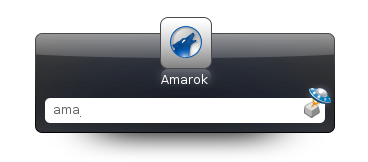
With Launchy you can not only launch applications but also -- using the same keyword philosophy -- launch your preferred media player with a specific MP3 file; invoke your preferred desktop search tool while entering a search term of your choice; or have your preferred browser open on a specific bookmark or page from the history. The possibilities are virtually endless. Version 2 of Launchy is less stable than v1, and many users prefer to retain the final version 1 iteration! But alongside Launchy, the other contenders fall down on configurability or indexing performance.
Keyword Command
** Please note that the Google Safe Browsing service is currently reporting the Enso site as suspicious [3]. WOT (Web Of Trust) and Comodo DNS still see this site as being clear but It may have been tampered with and malicious code inserted. This is why we have broken our own link to the vendor's home page in the Quick Selection Guide below and listed Softpedia as the download source. A simpler alternative is SlickRun. Slickrun is minimalist but extremely easy to work with. At its heart is a concept called MagicWords which, as you might expect, are typed shortcuts to programs or functions. Helpfully, it guesses which shortcut you want before you've finished typing it, so it can be very quick to use. New MagicWords can be added through an easy dialog, or by dragging shortcuts to its command window. It also incorporates a simple note-taking feature. Well worth a try. For anyone who wants simplicity and ease of use without too many bells and whistles, it's a very good choice. Panels Coming to the panels class, there are a lot of good choices, including FSL Launcher, Fast Launcher and 8Start. But 8Start comes out on top in many key areas like footprint and functionalities. Menus In the menus class, readers suggestions have led me to change my mind and suggest as the best solution Free Launch Bar: this is an extremely stable piece of software that will give you exactly what you want from it. A good contender is JetStart, but the free version is limited to 5 pre-set general categories. Docks Finally, the docks class. These tend to be graphically interesting, often featuring a configurable background shape on which appears icons for applications, documents, shortcuts or controls. They can usually be persuaded to stick themselves to a screen edge or some other location. They're often a bit like toolbars, but prettier. I have to admit I'm not an enthusiast of these type of launchers, so my tests may be limited by my lack of imagination or insight into their good points. Two specific programs of this type are worth a look. I can say that a good choice is RocketDock. It is well supported, has a small memory footprint and can probably do whatever you'd expect from a dock. It's very configurable, with good options for visual style, behaviour and docking position. Another excellent choice is Magic Formation (thank you Anonymous reader!). It sits somewhere between panels and docks in function but is included here because it's visually more dock-like than panel-ish. It doesn't require installation (although I have yet to check if its truly portable). Its default behaviour is to display a circle of icons around a colourful centre circle when a circle gesture is performed with the mouse anywhere on the desktop. This means it's there when you want it and not when you don't. (Although as I use a graphics tablet rather than a mouse, I occasionally find I get it by accident!) New icons can be added by dragging them to the centre circle. Documents can be dragged to application icons too. By default, the circle of icons contains shortcuts to favourites, My Documents, the desktop, My Computer, the command prompt, calc.exe, notepad.exe, mspaint.exe and the volume control, but any or all of these can be modified. The program allows the selection of any one of up to 25 pages of icons. If I had to choose a launcher of this type to use, this one would definitely be my choice. MagicFormation is a real grower, and has already notched up a Lifehacker recommendation. Congratulations! Both are winners. Other software suggestions:
|
 The only viable alternative is
|
Related Products and Links
|
|
|||||||||||||||||||||
|
|||||||||||||||||||||
|
|||||||||||||||||||||
|
|||||||||||||||||||||
|
|||||||||||||||||||||
|
|||||||||||||||||||||
|
|||||||||||||||||||||
|
|||||||||||||||||||||
|
|||||||||||||||||||||
|
|||||||||||||||||||||
|
|||||||||||||||||||||


 2.5
2.5  Open Source Freeware (includes program code)
  Windows, Linux, Mac OS X

|
Editor
|
| This software category is maintained by volunteer editor oblivion |
 [31]
[31]