

|
Introduction
|
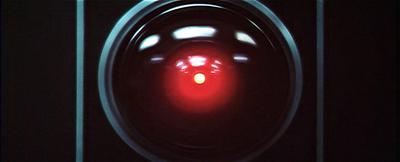 This article has a collection of thought provoking science fiction (SF) movies. It surveys an exciting range of imaginative technology, computers, futuristic visions, and underlying modernism. In most cases the films portray compelling possibilities for progress, speculative ideas, or "what if" thought experiments. The article has a top 100 list of the best SF films of all time, as rated by film critics and users. The ranking is calculated from online critic and user ratings. We can't change the ranking of these films unless the user or critic ratings change, but you can rate the films at the sites that we use as sources. The meta-ratings and grades throughout the pages are also calculated by these source ratings. Next is our editor favorites presented in a short list of 30+ SF essentials. The goal is to emphasize films that are supportive of future science or technology, or films that are semi-pure to SF, timeless in their visions, or dense with SF gems. The movies don't need high ratings, broad appeal, or box office success; they only need to have excellent or unique SF thought experiments. We also have dedicated decade pages for our complete editor picks of the greatest science fiction movies. You can compare our comprehensive meta-scores to the ratings of other sites for perspective. Our meta-scores help to understand the Internet buzz for a movie, but they aren't intended as the sole indicator of a movie's quality or to reduce film art and criticism to numbers (our editor choice lists ignore the hype and attempt to comment on the most fascinating SF movies). Spoiler Warning: Possible unintentional or minor spoilers follow. |
Quick Links
Complete Editor Picks and Dedicated SF Pages
Most Recent Changes
|
|
[*Critics Choice (Best Avg. Critic Ratings with 93.7)] [*Users Choice (Best Avg. User Ratings with 86) goes to “Star Wars: Episode V - The Empire Strikes Back” (1980, 85.7/A+)] [*Series: VI - Return of the Jedi (1983, 74.8/B+)] [*Series: BF II (1989, 70.6/B), BF III (1990, 69/B)] [*Series: Alien (1979, 82.8/A)] [*Series: Terminator 2: Judgment Day (1991, 78.5/A-)] [*Series: Iron Man 2 (2010, 68.2/B)] [*Series: III: Search for Spock (1984, 66.6/B-), IV: Voyage Home (1986, 70.9/B), VI: Undiscovered Country (1991, 70.3/B)] [*Series: The Matrix Reloaded (2003, 68.2/B)] [*Series: Mad Max (1979, 73.6/B+)] [*Series: Ghost in the Shell 2: Innocence (2004, 69.8/B)]
Top Decades -- The Top 100 has the following distribution of films by decade:
Top 10 Worst SF -- For when you're in a mood to see a really bad movie:
Top 10 User Snub List -- Here are SF films that users gave significantly higher ratings than sometimes snobbish critic meta-ratings, while also giving good user ratings (at least as high as the lowest meta-score on the top 100):
Movies are ranked by a poll of polls rating gathered from various sites. Formula: =(Average(MRQE.com; Rottentomatoes.com *10; Metacritic.com; Moverreviewintelligence.com) + Average(Netflix.com *20; Flixter.com *20; IMDb.com *10)) /2 Secondary formula for (typically older) films with fewer than 20 critic ratings: =Average(RT *10; Netflix *20; Flixter *20; IMDb *10) Often these sites have multiple rating systems. We only choose qualitative averages. For Flixter user ratings, we used the user average shown on Rotten Tomatoes. The Metacritic and MRI ratings aren't available for older films, so the number of sources varies. However, four sources and 1000 user votes were required to receive our meta-score. The max score is 100 in theory, but since no movie scored higher than 87.5, grades were awarded as follows: A-Excellent (88-76.1), B-Above Average (76-64.1), C-Average (64-52.1), D-Poor (52-40.1), E-Terrible (40-0). Some popular series brands are in brackets to allow diversity, but only if they would have made the Top 100 and are within a decade of the base film. Some high quality and unique films get placed in brackets, but this rule keeps us consistent. To keep the list as SF oriented as possible, some films are excluded when a major database site (IMDB, Rotten Tomatoes, Netflix, MRQE, Wikipedia, etc.) didn't think to tag them as SF, or if they were listed as "SF & Fantasy" for fantasy. However, if a film is about progress or has unique ideas, then we may include it if it doesn't fail at one of these standards: We exclude (a) films that emphasize supernatural powers (superhero films, Ghostbusters); (b) monster-horror films (but we follow Vivian Sobchack by including "creatures", such as those produced by mutation or radiation); (c) other films with weak or minor SF elements that aren't central enough (such as some kids films, comedies, etc.). |
Metropolis (1927). Meta-Score: 88/A+Envisions a future industrial-city complex in which underground workers rebel (under the direction of a female humanoid and a mad-scientist) against a tyrant tycoon. The mad scientist creates a mechanical robot, but it was imagined prior to digital machines and so lacks realistic artificial intelligence. However, the robot transforms into a sort of human-Frankenstein monster, so it reflects the desire of humans to master nature and control it as in Shelley's Frankenstein. It also portrays central monitoring and a control desk for invasive workplace supervision. Starring: Alfred Abel, Gustav Fröhlich, Brigitte Helm, Rudolf Klein-Rogge. Based on the novel by Thea von Harbou. Directed by Fritz Lang. Sources: IMDb | RT | MRQE | Wikipedia H. G. Wells' Things to Come (1936). Meta-Score: 70/B
Starring: Raymond Massey. Based on a novel by H. G. Wells: "The Shape of Things to Come". Directed by William Menzies. Sources: IMDb | RT | MRQE | Wikipedia | Technovelgy / News Destination Moon (1950). Meta-Score: 58/CPortrays a mission to the moon by plausible scientific theory and by business/engineering know how. It also has a semi-modern rocket launch and a differential analyzer (an actual mechanical computer from the 50s), scientific equipment to investigate the moon (telescope, Geiger counter), and communications between astronauts on the moon and reporters on earth. It symbolizes its moon landing as a claim on the moon for all mankind, and it has lighthearted moments with a Woody Woodpecker cartoon to demonstrate space flight. Starring: John Archer, Warner Anderson, Tom Powers. Screenplay by SF guru Robert Heinlein, Alford Van Ronkel, James O'Hanlon. Produced by George Pal. Directed by Irving Pichel. Sources: IMDb | RT | MRQE | Wikipedia The Day the Earth Stood Still (1951). Meta-Score: 79/A-Includes the traditional flying saucer, a ray gun effect, and a cool guardian robot. A Martian (Klaatu) displays a love for peace by use of robotic force, and (Einstein-like) scientists are sought as ambassadors to unite our warring planet of divided nations. The full idea of the robot (Gort) is fascinating and also the high esteem held for scientists (such as portraying an Einstein-like scientist and having Klaatu discuss science with an excited human child). B&W. Starring: Michael Rennie, Patricia Neal, Hugh Marlowe, Sam Jaffe. Based on a story by Harry Bates: Farewell to the Master. Directed by Robert Wise. Sources: IMDb | RT | MRQE | Wikipedia When Worlds Collide (1951). Meta-Score: 64/C+
Starring: Richard Derr, Barbara Rush, Peter Hansen. Based on the novel by Philip Wylie and Edwin Balmer. Produced by George Pal. Directed by Rudolph Maté. Sources: IMDb | RT | MRQE | Wikipedia The War of the Worlds (1953). Meta-Score: 71/BThe ultimate classic alien invasion movie in which the aliens treat us as lower life forms, best left destroyed! The special effects were good at the time, but now look outdated. Nevertheless, it's arguably still the best version. Starring: Gene Barry. Based on the novel by H. G. Wells. Directed by Byron Haskin. Sources: IMDb | RT | MRQE | Wikipedia Forbidden Planet (1956). Meta-Score: 78/A-Has an advanced robot (Robby!), a machine for improving human intelligence, supercomputers for running an ancient alien civilization (the Krell), a hovercraft, and semi-virtually projected creatures (or a dangerous materializing-Freudian-id!). It is a movie rich in ideas as a Star Trek-like crew investigates a planet (Altair IV) and unknowingly run into a lot of trouble and a tempest. Starring: Walter Pidgeon, Anne Francis, Leslie Nielsen. Directed by Fred Wilcox. Sources: IMDb | RT | MRQE | Wikipedia The Time Machine (1960). Meta-Score: 73/B+This is the classic time machine story, with a fantastic demonstration of an object entering the 4th dimension from the point of view of people in the present. The second half is interesting because it might signify a future in which some humans evolve into a different species (becoming cannibals called the Morlocks) and in which our future human descendants (the Eloi) become like hedonistic cattle (with little interest in science and progress). Starring: Rod Taylor. Based on the novel by H. G. Wells. Directed by George Pal. Sources: IMDb | RT | MRQE | Wikipedia Village of the Damned (1960). Meta-Score: 73/B+A group of creepy children with blond hair are dangerous mind controllers gifted in self-defense, mind reading, and stoicism. They are psychically linked together in a collective of brainpower, with the potential to help make advances in science and contact with aliens on other worlds. Starring: George Sanders, Barbara Shelley, Martin Stephens. Based on a novel by John Wyndham: The Midwich Cuckoos. Directed by Wolf Rilla. Sources: IMDb | RT | MRQE | Wikipedia Robinson Crusoe on Mars (1964). Meta-Score: 67/B-Begins with a NASA inspired space sequence (using typical astronaut talk, procedure, ship detachments, plausible landers) with U.S. astronauts orbiting and researching Mars. After a forced crash landing, most of the middle of the film is about the struggle of astronaut 'Kit' Draper (Paul Mantee) to survive and overcome isolation. The documentary smartly notes that the stranded astronaut explores many different environments on Mars in contrast to George Lucas' frequent tendency to portray one environment per planet (desert planet, city planet, etc.). Haskin wanted scientific realism (except for a few dramatic fireballs) and so the film is like a time-capsule of our understanding (and misunderstanding) of Mars at that time. It makes Mars feel alien by using a red sky and locations like Death Valley National Park, California, and it has a few noteworthy gadgets (miniature camera, portable radar and omnicom). Starring: Paul Mantee, Victor Lundin. Directed by Byron Haskin. Sources: IMDb | RT | MRQE | Wikipedia Fantastic Voyage (1966). Meta-Score: 69/BFollowing in the tradition of The Incredible Shrinking Man, the film voyages to the micro "universe" within. A revolutionary scientist invents stable miniaturization technology, but after suffering an injury his secrets threaten to die with him. A team uses a miniature vessel (the Proteus) to try to heal the scientist. Most such movies about the micro world lack scientific credibility in the details, but they allow us to adopt a different perspective and to use similar thought processes that some scientists use in thought experiments. For example, Carl Sagan compares us to little universes (Cosmos #2). Starring: Stephen Boyd, Raquel Welch, Edmond O'Brien, Donald Pleasence. See the novel of the same name by Isaac Asimov. Directed by Richard Fleischer. Sources: IMDb | RT | MRQE | Wikipedia 2001: A Space Odyssey (1968). Meta-Score: 83/AIt achieves excellence for its vision of realistic space flight, speculative spacecrafts, HAL 9000 (as a sentient computer or simulator of sentience), possibly an ancient alien transport and information pathway system (in the Star Gate sequence), a star child (perhaps an intelligent space dwelling being), and alien technology (the Monolith) that is so advanced in science it would look to us like magic. Perhaps it flaunts a Nietzschean-like evolution of intelligence from our ape ancestors, to humans, to machines, to a star child. Starring: Keir Dullea, Gary Lockwood, William Sylvester. Based on short stories by Arthur C. Clarke. Directed by Stanley Kubrick. Sources: IMDb | RT | MRQE | Wikipedia | Archive | Technovelgy / News Colossus - the Forbin Project (1970). Meta-Score: 71/B
Starring: Eric Braeden. Based on a novel by D. F. Jones: Colossus. Directed by Joseph Sargent. Sources: IMDb | RT | MRQE | Wikipedia The Andromeda Strain (1971). Meta-Score: 68/B-Includes a medical computer, automated decontamination systems, robotic arms, and SF questions about new forms of life. The epitome of SF: A team of elite scientists uses an intricate and secret underground research lab to investigate alien microorganisms (before it is too late). The novel includes discussions about the most likely alien lifeforms, co-evolution of life, and skepticism over the survival value of human intelligence. Starring: James Olson, Arthur Hill, David Wayne, Kate Reid. Based on the excellent novel by Michael Crichton. Directed by Robert Wise. Sources: IMDb | RT | MRQE | Wikipedia | Technovelgy / News Logan's Run (1976). Meta-Score: 63/C
Starring: Michael York, Jenny Agutter, Richard Jordan. Based on the novel by William F. Nolan and George C. Johnson. Directed by Michael Anderson. Sources: IMDb | RT | MRQE | Wikipedia | Tech News Star Wars (1977-1983, 1999-2005)Inspires scientists to create gadgets that mimic things in the movies, and sends fans into a frenzy of imagination about SF possibilities such as strange new aliens and new civilizations. It follows that it must be made by a director who likes to put cool characters in alien worlds and have them play around with gadgets. And then totally refashion his first three movies with the newest of computer technology. Although Star Wars is on the opposite end of the spectrum from movies like 2001, so are many computer programmers and a bunch of other nerds who love technology, popular science, and progress. Written and produced by George Lucas. Sources: IMDb | RT | MRQE | Wikipedia | Wikia | Technovelgy / News Alien (1979), 83/A. Aliens (1986), 84/A+Contains many SF themes such as a central computer and an alien race, along with a heavy dose of spaceships, androids, cryogenic freezers, controlling corporations, and creative H. R. Giger designs. The first film, Alien, begins with an excellent, patient opening space sequence and investigation of the alien-infested spaceship. In the second film, Aliens, a group of marines enlist Ripley as an adviser to help investigate a terraforming colony (on LV-426). The marines have all sorts of weapons technology and an android (Bishop), but they bring along a watchful corporate official who secretly wants to preserve aliens for their immense biological warfare potential. Starring: Sigourney Weaver. Alien, Dir. Ridley Scott. Aliens, Dir. James Cameron. Sources: IMDb | RT | MRQE | Wikipedia Blade Runner (1982). Meta-Score: 84/AAchieves excellence in its portrayal of a futuristic cityscape, its density of SF gems, and its realism. It asks us whether we ought to extend ethical consideration to replicants when we know they are machines and when Deckard must use a complicated Voight-Kampf empathy test to try to detect them, i.e. when Tyrell designs them to be "more human than human." Also includes an Esper picture analyzer, genetic engineering (eyes, tiny logos), massive advertising (airships, moving images), and hovercrafts/flying cars.  Starring: Harrison Ford, Rutger Hauer, Sean Young, Edward James Olmos, Daryl Hannah. Based on a novel by Philip K. Dick (P.K.D.): Do Androids Dream of Electric Sheep?. Directed by Ridley Scott. Sources: IMDb | RT | MRQE | Wikipedia | Wikia | Technovelgy / News The Thing (1982). Meta-Score: 78/A-Paranoia is let loose when aliens are found to be genetic mimickers and body invaders of any species. In some ways it is closer to John W. Campbell's Who Goes There? than the original movie. The arctic locations are nicely atmospheric and the all male cast is noteworthy, but (like the original) it doesn't fully develop an interesting back story to the alien. The SF elements pose fascinating possibilities: an alien could seed other planets, invade and mimic diverse species, and either quickly learn about them (to transmit data back home) or increase their chances of survival. But the idea is vague on how alien explorers -- just on the basis of their genetics -- could know to send back information to their home world. Starring: Kurt Russell. Directed by John Carpenter. Sources: IMDb | RT | MRQE | Wikipedia TRON (1982). Meta-Score: 67/BIncludes the legendary SF creation -- the Master Control Program (one of the most power hungry computer programs ever), which was created by no one single person -- and the security Tron program and a far-fetched digitizing machine. A game designer is digitized and downloaded into a video game world. It portrays programs that are skeptical of intelligent design and place faith in 'users' while battling an MCP (master control program) intent on total domination. Starring: Jeff Bridges. Directed by Steven Lisberger. Sources: IMDb | RT | MRQE | Wikipedia | Wikia The Terminator (1984), 81/A. Terminator 2: Judgment Day (1991), 79/A-Portrays a war between men and machines (as in The Matrix), and people/cyborgs use time travel with the intention of altering or preserving future events (contra The Time Machine where the future/past can't be changed), though, we discover that the future ultimately depends on these efforts! Starring: Arnold Schwarzenegger, Linda Hamilton. Directed by James Cameron. Sources: IMDb | RT | MRQE | Wikipedia | Wikia Brazil (1985). Meta-Score: 81/AIt creates an impressive and one of a kind futuristic world, with memorable scenes of cosmetic surgery, oppressive bureaucracy (mistakes, red-tape, invasion of privacy), dream fantasies, TV addicted workers, presumed terrorist attacks, torture, and alienation. Starring: Jonathan Pryce. Directed by Terry Gilliam. Sources: IMDb | RT | MRQE | Wikipedia Jurassic Park (1993). Meta-Score: 75/B+
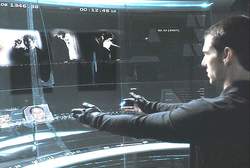
Starring: Sam Neill, Laura Dern, Jeff Goldblum. Based on the novel by Michael Crichton. Directed by Stephen Spielberg. Sources: IMDb | RT | MRQE | Wikipedia | Wikia Ghost in the Shell (1995), 76/B+. Innocence: Ghost in the Shell 2 (2004), 70/BIncludes highly advanced androids, invisibility tech, mental implants for expanded access to the world's information, and sentient programs/ghosts. Both are serious anime movies with extraordinary visual, flashy contemporary-looking technology, and imaginative elements. Oshii's visions often take place in what he calls 'borderline realms' (such as an Internet). The ghost/body dualism seems to extend to computer information or programs in a network. In GITS-2 lookout for the memory hacking, loop traps, and humans as the birth of A.I.! It does have some long artsy sequences for songs and parades, witty speeches, and literary quotes in GITS-2. Anime. Based on the manga of Masamune Shirow. Directed by Mamoru Oshii. Sources: IMDb | RT | MRQE | Wikipedia | Wikia Star Trek: First Contact (1996). Meta-Score: 73/B+Includes nanotechnology, borgized people, various types of Borg implants, warp engines, and an android. It explores the importance of discovering intelligent alien life and the birth of Roddenberry's vision of the future. The Borg, a network of zombie-like drones with a collective-consciousness, use time travel to try to assimilate humans into their collective.  Starring: Patrick Stewart, Jonathan Frakes, Brent Spiner. Directed by Jonathan Frakes. Sources: IMDb | RT | MRQE | Wikipedia | Wikia Contact (1997). Meta-Score: 69/BSmartly portrays themes concerning SETI, scientific inquiry, and science vs. religion. Includes computer aided radio astronomy equipment and a speculative alien space transporter. It seems to mimic and improve the method of alien contact in This Island Earth and exudes a love for science. Starring Jodie Foster. Based on the novel by Carl Sagan. Directed by Robert Zemeckis. Sources: IMDb | RT | MRQE | Wikipedia The Matrix Trilogy (1999-2003)Just for starters it includes a computer simulated reality program, training and educational programs zapped straight to human memory, hovercrafts, EMPs (Electro-Magnetic Pulses), and many designs of machines. Or it's simply the green coded world, with lots of martial arts & gunfights. The first movie is a likely SF classic, and the second tells us more about the matrix world. Watch for all the philosophical questions (such as skepticism, freewill, self-knowledge, dualism, Neo as ubermensch), the idea that the human mind can be hacked into just like a computer, causation themes, machine superiority against human resistance, and human reliance on machines.  Starring: Keanu Reeves, Laurence Fishburne, Carrie-Anne Moss. Directed by the Wachowski Brothers. Sources: IMDb | RT | MRQE | Wikipedia | Wikia Minority Report (2002). Meta-Score: 76/A-
Starring: Tom Cruise. Based on a short story by P.K.D.: Minority Report. Directed by Stephen Spielberg. Sources: IMDb | RT | MRQE | Wikipedia | Technovelgy / News Primer (2004). Meta-Score: 68/BIts low budget and jigsaw puzzle story confuses some viewers, but it's a great vision of discovery in that science and technology does not always progress intentionally and colorfully, it could just be a couple guys out in their garage tinkering. It speculates about a novel type of time travel (by use of quantum theory and a replication side effect), and the script has witty comments about scientific discovery and causation. Starring: Shane Carruth, David Sullivan. Directed by Shane Carruth. Sources: IMDb | RT | MRQE | Wikipedia Links: Official Site | Primer Universe The Island (2005). Meta-Score: 61/C+Cloners use Orwellian tactics and conditioning to keep clones under control, and they use them for a grotesque commerce. Includes a table top computer (with a gesture interface), an Xbox virtual fight game, and massive invasive monitoring (synaptic nanobots, dream monitoring, and automatic urine analysis). Most of the inhabitants accept such invasive treatment as commonplace. We see analogous uses of power becoming common in our own society, so the film perhaps illustrates that what we call dystopia today could slowly become accepted as utopia. Some of the initial sets are stunning, but the final action scenes and car stunts are a bit out of place. Starring Ewan McGregor, Scarlett Johansson. Directed by Michael Bay. Sources: IMDb | RT | MRQE | Wikipedia WALL·E (2008). Meta-Score: 86/A+It's no surprise that Disney backed this type of film; it has all the signs of anthropomorphized robots, for WALL-E sighs, scares, dances, and flirts. The director attempts to use as few anthropomorphisms as possible as if the robot had advanced over many years, but the film fails to explain any new advances in programming. The good thing is that the movie has many other graces -- an extremely imaginative EVE-flying bot, a high tech automated ship, and a hopeful perspective on enriching our humanity (where humans do exotic things like question and learn). Starring (voices): Ben Burtt, Elissa Knight, Jeff Garlin. Directed by Andrew Stanton. Sources: IMDb | RT | MRQE | Wikipedia Moon (2009). Meta-Score: 75/B+Sam Bell works alone on the Moon, repairing Helium 3 harvesters and sending the collected energy back to Earth. The plot makes sense of this loner situation later and further cuts off Sam in many psychologically interesting ways. Sam is joined by a GERTY computer/robot. We discover that Sam Bell may receive some programming too, but it's difficult to say much more without spoiling the psychological aspects of it. Starring: Sam Rockwell. Directed by Duncan Jones. Sources: IMDb | RT | MRQE | Wikipedia Inception (2010). Meta-Score: 81/AIt adds layer upon layer of possibilities until you either want to run out and become an Architect, a God like master of designing mind-worlds, or let the images take over as they lead you through a labyrinth of dreams within dreams. Penrose steps showcase the creativity of the mind in dreams, dream projections take on a life of their own (but without their former humanity), and dreamers experience time distortions and weightlessness.  Starring: Leonardo DiCaprio, Marion Cotillard, Joseph Gordon-Levitt, Ellen Page, Tom Hardy, Ken Watanabe. Written and directed by Christopher Nolan. Sources: IMDb | RT | MRQE | Wikipedia Complete Editor Picks and Dedicated Decade Pages:All | Pre-1950s | 1950s | 1960s | 1970s | 1980s | 1990s | 2000s | Meta-Scores (A-Z) |


Excellent or Informative Sites
Best SF Lists
Resources
Related TSA Articles
Source ratings and filmography data courtesy of The Internet Movie Database, Rotten Tomatoes, Netflix, Movie Review Query Engine, Metacritic, and Movie Review Intelligence. |
|
Tags: alien invaders, androids, artificial intelligence (AI), cloning, cyberpunk, dystopia, films, futuristic, high tech, intelligent sf, nanotechnology, progress, robots, science fiction (scifi, sci-fi, SF) movies, SETI, space exploration, time travel, quantum mechanics, utopia, virtual reality
 We are looking for people with skills or interest in the following areas: